CASTIRGALU drives the implementation of applied knowledge to the limit to shape the foundry of the future. Among others, these are the state-of-the-art projects that top edge foundries need to deploy:
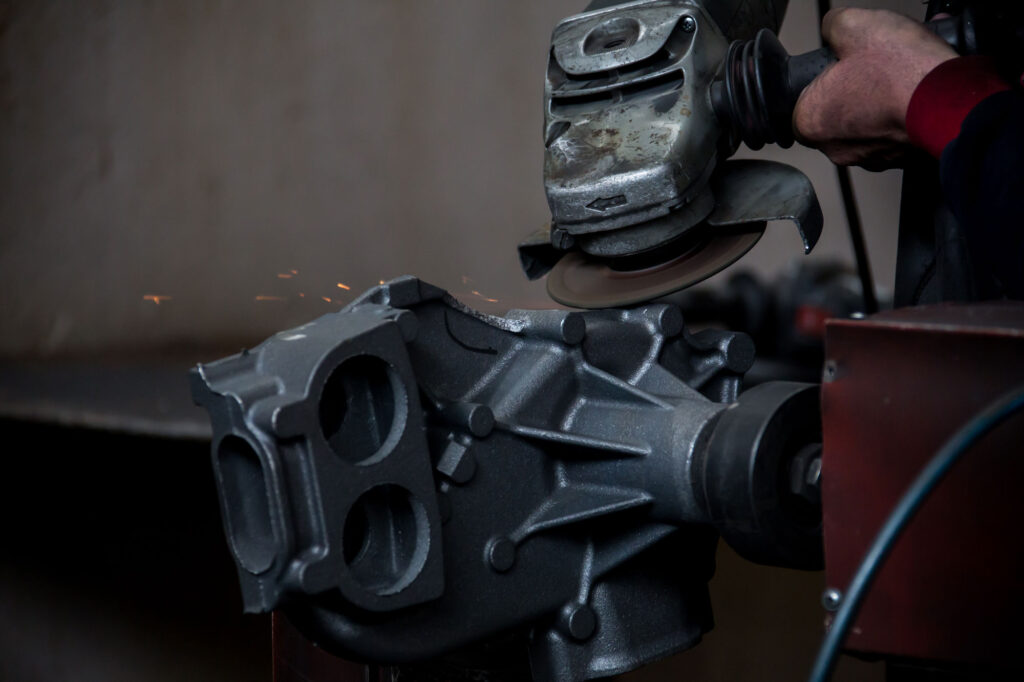
Fettling optimization
Monitoring molding machine mismatch and implementing the right procedures regarding core print clearances, core setter (or core placement) and sand properties (adjusted to molding machine parameters) allow getting a consistent output of castings without flash and burrs.
- The narrow clearances and mismatch feasible to achieve in vertical molding lines minimize the flash and burrs. Therefore, several castings can be fettled in line, which drives to a huge cost reduction and increase of productivity because storage, container movement, logistics, etc., can be removed.
- A full control of the clearances and mismatch in horizontal molding lines allow reducing the thickness of the flash and the time for fettling can be reduced more than the half.
Casting yield optimization
Usually gating and feeding systems are very conservative to absorb all process deviations that may occur during casting manufacturing. When consistency in metallurgy, process parameters, sand shop, core shop, and molding machine is achieved, state-of-the-art design concepts can be applied to minimize or even eliminate the need of feeders (risers or sleeves). Changes in melt preparation and treatment, together with advanced solidification know-how, drive to the optimization of the gating and feeding design according to the target consistency. Typically, the company average casting yield can be improved by 3-7% with a corresponding increase in the revenue of the company.
Scrap rate reduction via manufacturing process monitoring.
The deployment of state-of-the-art technology allows monitoring all areas involved in the manufacturing process in real time. Therefore, deviations from internal specification can be quickly detected and corrective actions can be taken, avoiding scrap production.
Casting cost reduction.
A complete technical survey of the process usually allows detecting inefficiencies in the manufacturing process.
- Melting shop is reviewed to use the cheapest feasible raw materials and to adjust the melting procedure to get the maximum productivity (from tap to tap maximum 55 minutes in medium frequency induction dual track furnace if there is enough power).
- We go through FeSiMg, conditioner and inoculant type and amount, to employ the best one for current procedure and to avoid their overuse (which causes problems in the castings).
- Mixer and additions are checked and optimized according to the weight and shape of the produced castings in the sand shop.
- Molding machine speed and mold thickness are optimized and adjusted to the produced castings.
- Core making speed, amount of resin and core box wear are optimized in the core shop to get the maximum efficiency without promoting problems in the castings.
- The accuracy of Engineering concepts is verified to get the best performance from the pattern plate design and to avoid arguments with the client regarding isolated areas and maximum defect allowed, chemical composition imposed and mechanical properties specification, etc.